

Anodizing is an electrochemical process that forms a controlled oxide layer on aluminum and other metals to improve corrosion resistance, hardness, and surface appearance. At the heart of this process is the rectifier, which supplies stable and adjustable DC power to drive the reaction.
1. Industrial Anodizing Power System
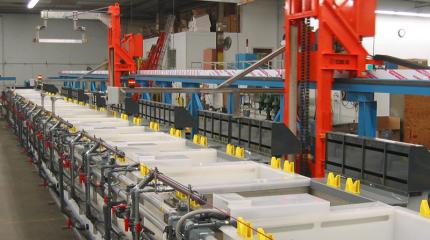
In an anodizing line, the rectifier converts AC input power into DC output. The aluminum workpiece is connected to the positive terminal (anode), while the cathode (often lead or stainless steel) is connected to the negative terminal. When DC current passes through the electrolyte, oxygen ions react with the aluminum surface to form aluminum oxide (Al₂O₃).
Without a rectifier, stable DC current cannot be maintained, and the anodizing reaction would not proceed correctly.
2. Key Functions of the Rectifier in Anodizing
Stable DC Output
Anodizing requires continuous and unidirectional current. The rectifier ensures stable voltage and current, allowing precise control of oxide layer growth.
Adjustable Voltage and Current
Different anodizing processes require different parameters:
-
Decorative anodizing: typically 12–18V
-
Hard anodizing: up to 20–24V
-
Current density control is critical for oxide thickness
A high-quality rectifier provides accurate regulation to maintain consistent coating thickness and color.
Low Ripple for Surface Quality
Low ripple DC output improves coating uniformity, reduces burning at edges, and enhances surface smoothness. This is especially important for high-end architectural or electronic components.
High Current Capacity
Industrial anodizing often processes large workpieces or multiple parts simultaneously. Rectifiers may operate at hundreds or thousands of amperes to support production demands.
Protection and Reliability
Modern rectifiers include:
-
Over-voltage protection
-
Over-current protection
-
Short-circuit protection
-
Over-temperature protection
These features ensure safe and continuous operation in harsh industrial environments.
3. Power Flow in Anodizing
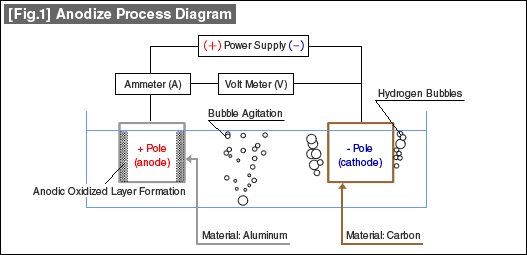
Power Flow:
AC Input → Rectifier → Filter & Control System → DC Output → Anodizing Tank
The rectifier is the core component that determines process stability, coating consistency, and overall production efficiency.
In anodizing applications, the rectifier is not just a power source—it is the control center of the electrochemical reaction. Stable DC output, precise regulation, and reliable high-current performance directly affect oxide thickness, hardness, corrosion resistance, and final product quality.
Selecting the right rectifier is essential for achieving consistent, high-quality anodizing results in industrial production.
Post time: Feb-06-2026


