

Understanding the Role of DC Power Supplies in Precious Metal Refining and Recovery
Precious metals such as gold, silver, platinum, and palladium are widely used in electronics, jewelry manufacturing, automotive catalysts, chemical processing, and other high-value industrial applications. As demand for these metals continues, efficient refining and recovery technologies have become increasingly important in the non-ferrous metal industry.
Among various metallurgical technologies, electrolysis plays an important role in precious metal refining, metal extraction, and resource recovery. These electrochemical processes require a reliable DC power supply to provide controlled electrical energy for metal dissolution, ion reduction, and metal deposition.
For industrial applications involving multiple electrolytic cells or specialized electrochemical processes, selecting an appropriate industrial DC rectifier is essential for stable operation and production efficiency.
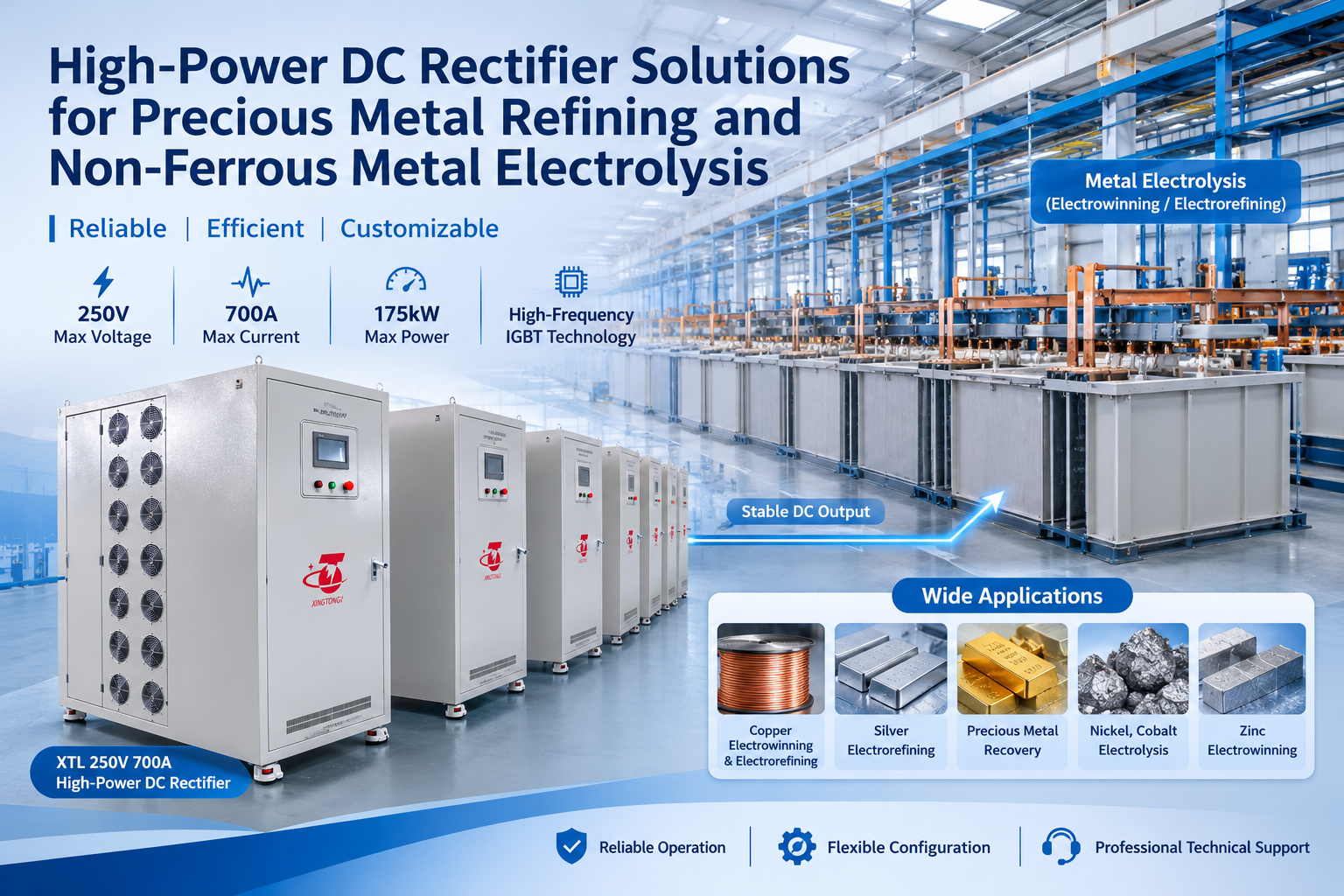
XTL provides high-frequency IGBT DC rectifier solutions, including a 250V 700A high-power DC rectifier with a maximum rated output power of 175kW, for industrial metal electrolysis and other demanding electrochemical applications.
1. What Is Precious Metal Electrolysis?
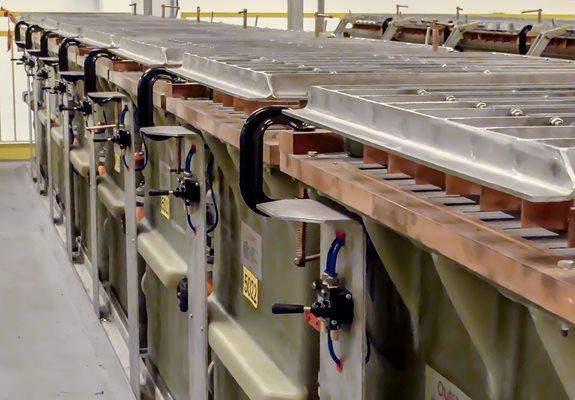
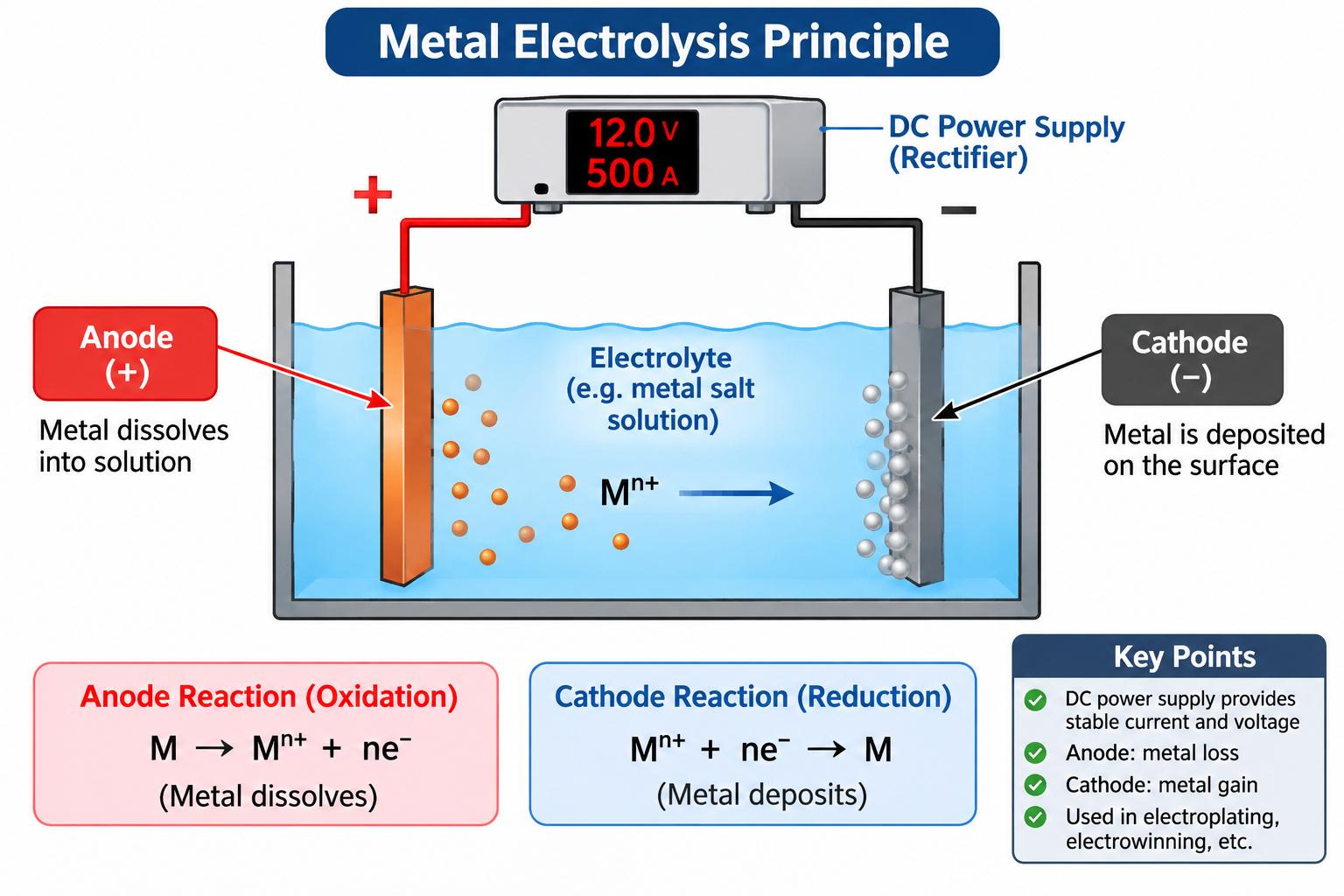
Precious metal electrolysis is an electrochemical process used to refine, extract, or recover valuable metals through controlled electrical reactions.
In a typical electrolytic process, direct current flows between the anode and cathode through an electrolyte containing dissolved metal ions or other electrochemically active species.
The basic cathodic reaction involves metal ions gaining electrons and depositing as metallic material.
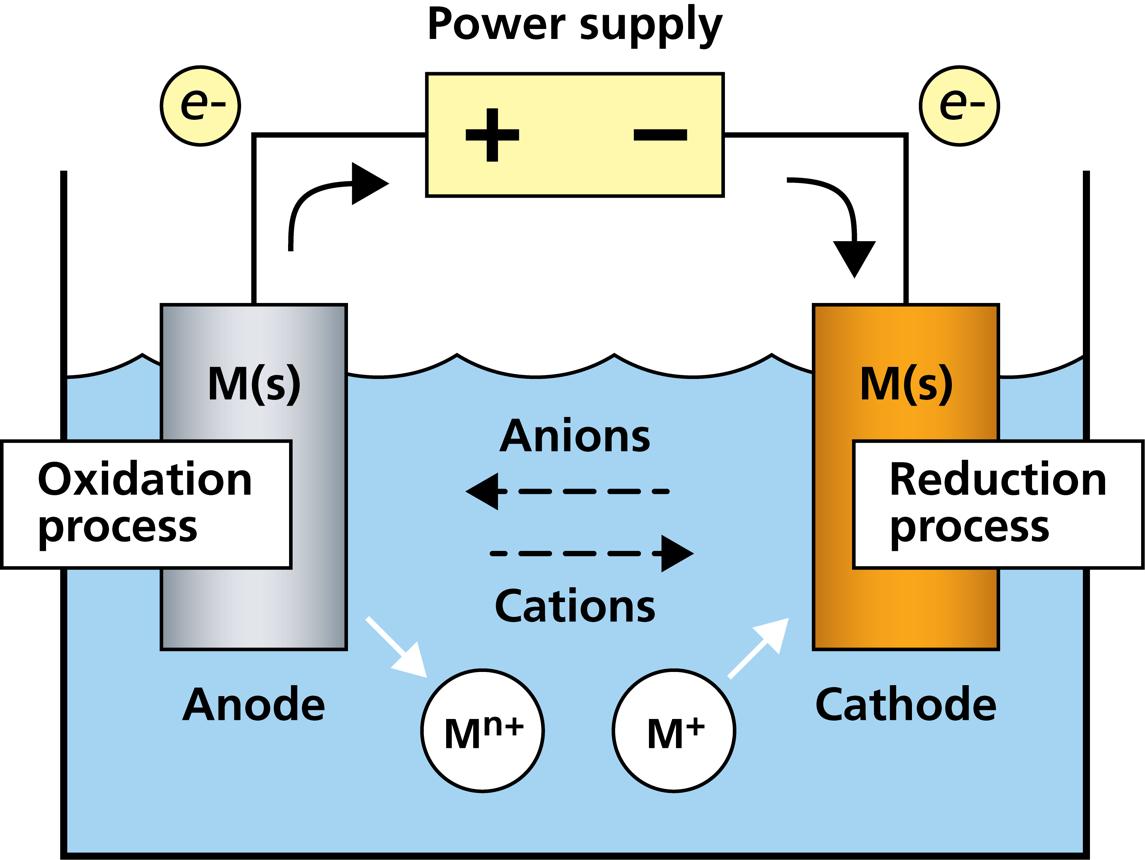
Depending on the process, the anode may dissolve into the electrolyte, while the target metal is deposited onto the cathode. In other applications, metal-bearing solutions are treated directly to recover valuable metals.
Electrorefining
Electrorefining is used to purify impure metals. The impure metal acts as the anode and dissolves into the electrolyte, while higher-purity metal is deposited on the cathode.
Electrowinning
Electrowinning is used to extract metals from metal-bearing electrolyte solutions. Direct current drives metal ions in the solution to deposit onto cathode surfaces.
2. Major Applications of Precious Metal Electrolysis
Precious metal electrolysis is used in various industries, particularly metal refining, electronic waste recycling, and industrial material recovery.
Gold Electrorefining
Gold electrorefining is an important process for producing high-purity gold from impure gold materials via the Wohlwill process.
- Impure gold bullion and doré bars
- Gold-bearing materials from refineries
- Gold-containing manufacturing scrap
- Pretreated electronic waste materials
Silver Electrorefining
The Möbius process is a widely recognized method for refining silver from impure silver anodes into high-purity crystals.
- Precious metal refineries
- Jewelry and silverware manufacturing
- Recycling of silver-bearing materials
- Recovery from metallurgical residues
Platinum and Palladium Recovery
Recovery of PGMs from automotive catalytic converters and electronics involves pretreatment, chemical leaching, and electrochemical recovery to isolate these high-value metals.
Electronic Waste Recycling
Printed circuit boards and semiconductor components contain gold, silver, palladium, and copper. Electrochemical recovery is used to extract these from treated solutions.
Non-Ferrous Metal Refining and Recovery
Beyond precious metals, electrolysis is vital for producing copper, zinc, nickel, cobalt, and manganese, requiring robust industrial electrolysis rectifiers.
3. What Are the DC Power Supply Requirements for Metal Electrolysis?
Stable DC Output
Maintains consistent electrochemical conditions to ensure metal deposition quality and production consistency.
Accurate Regulation
Constant-current (CC) and Constant-voltage (CV) control modes to accommodate different electrolyte and electrode configurations.
Appropriate Output Ripple
Filtering tailored to specific process needs to ensure stability and uniformity of metal deposits.
Industrial Protection
Overvoltage, overcurrent, and short-circuit protection, plus remote PLC communication for automation.
4. Typical Application Scenarios for a 250V 700A DC Rectifier
Multi-Cell Electrolysis Systems
Ideal for series-connected arrangements where high voltage is required to drive current through multiple cells simultaneously.
Industrial Metal Recovery Systems
Serves as the main power source for recovering copper, nickel, cobalt, and precious metals from bearing solutions.
Specialized Non-Ferrous Electrolysis
Provides up to 175kW of rated power for customized extraction and refining installations requiring specific voltage/current ratings.
Customized Production Lines
XTL assesses specific electrical requirements to provide customized rectifier configurations for specialized electrode systems.
Post time: Nov-11-2026


