

Electroplating manufacturers are accelerating the shift toward PLC-based automation in rectifier systems, aiming to improve precision, consistency, and operational transparency. By integrating a Programmable Logic Controller (PLC) into the rectifier, traditional DC power supplies are evolving into intelligent control platforms.
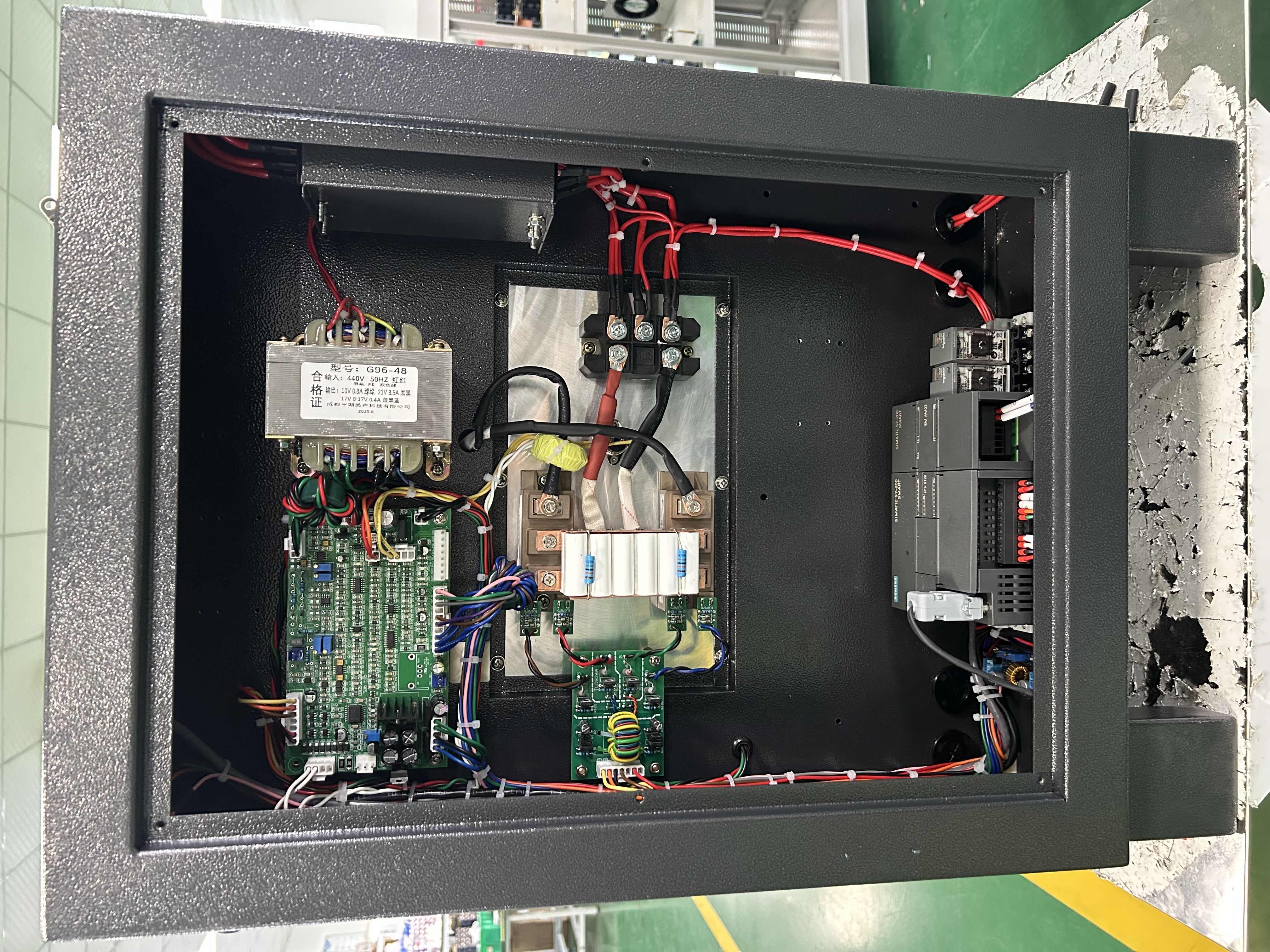
Electroplating rectifier unit
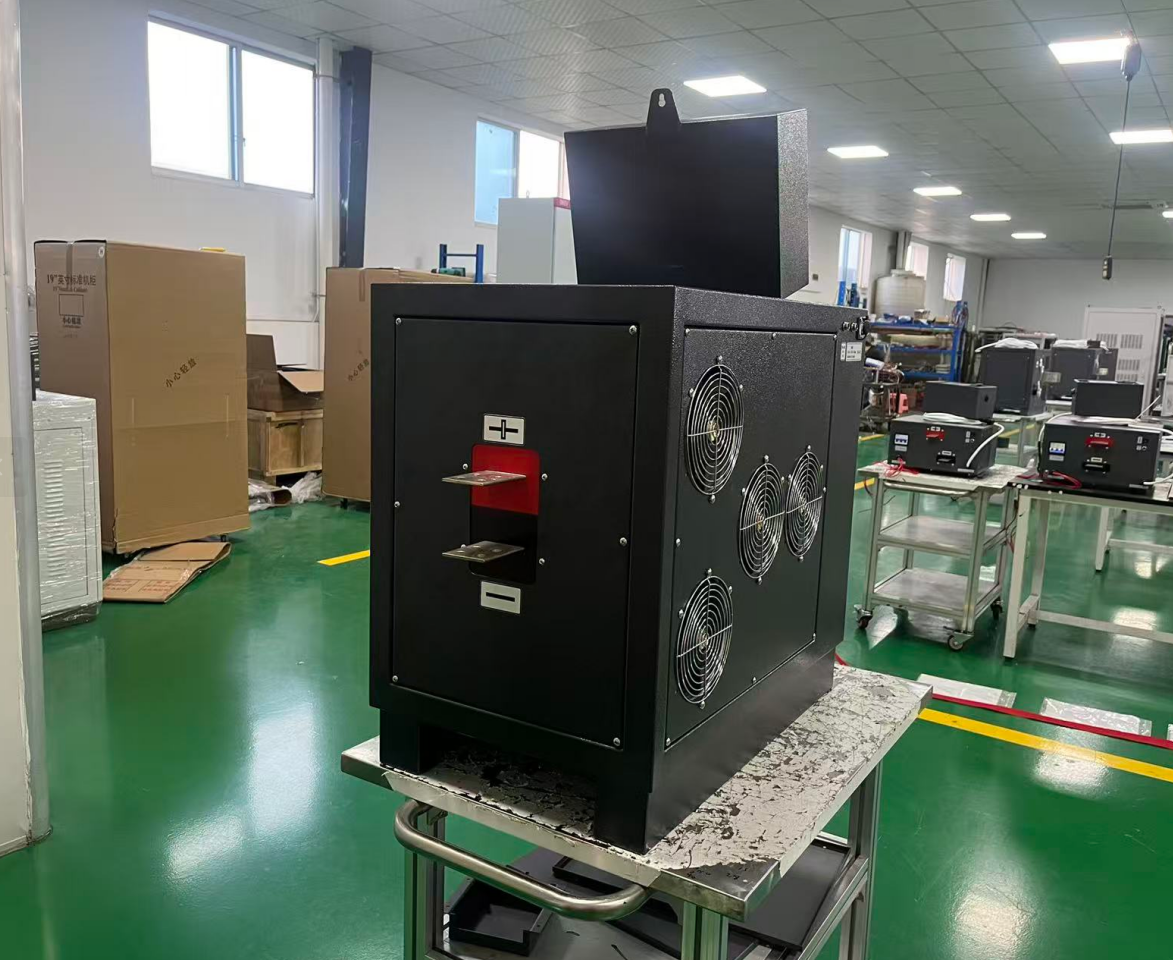
The rectifier converts AC to DC power for plating tanks. With PLC automation, operators can configure multi-step processes such as soft start, constant current plating, and controlled shutdown. This is particularly important for nickel, chrome, zinc, and copper applications, where current density directly affects coating thickness and surface finish.
HMI touch screen interface
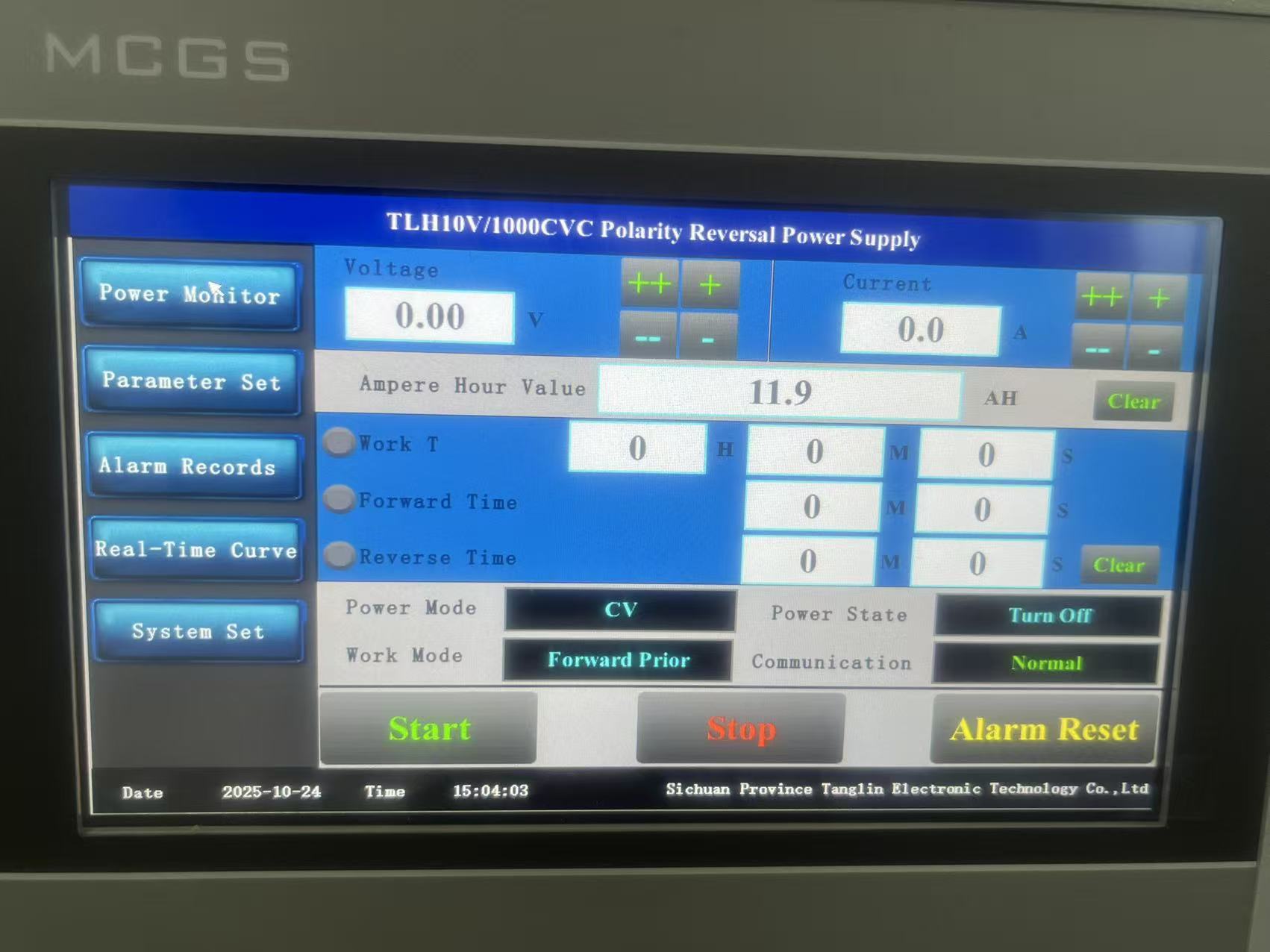
Through the HMI, operators can monitor real-time data, adjust parameters, and store process recipes for different products. Alarm records and fault diagnostics improve response speed and reduce downtime.
Automated plating line
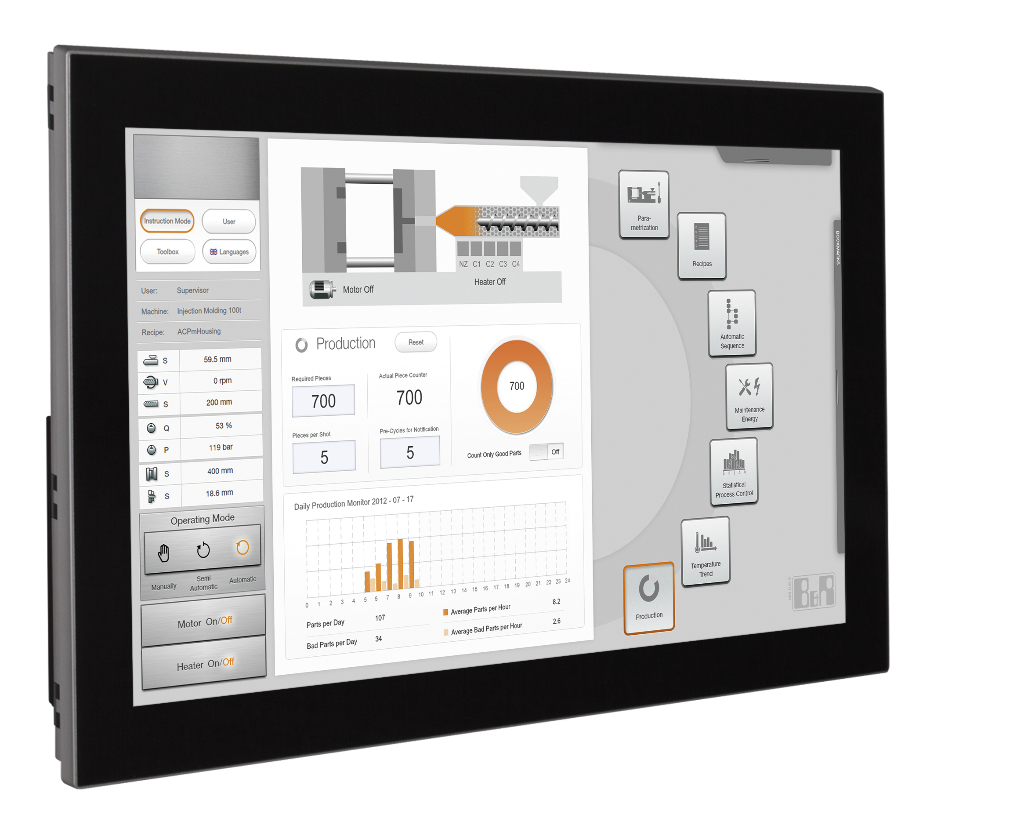
Industry professionals note that PLC automation reduces human error, improves batch consistency, and strengthens quality management. As environmental and quality standards become stricter, intelligent rectifier systems are becoming a standard feature in modern electroplating plants.
Post time: Feb-28-2026


